
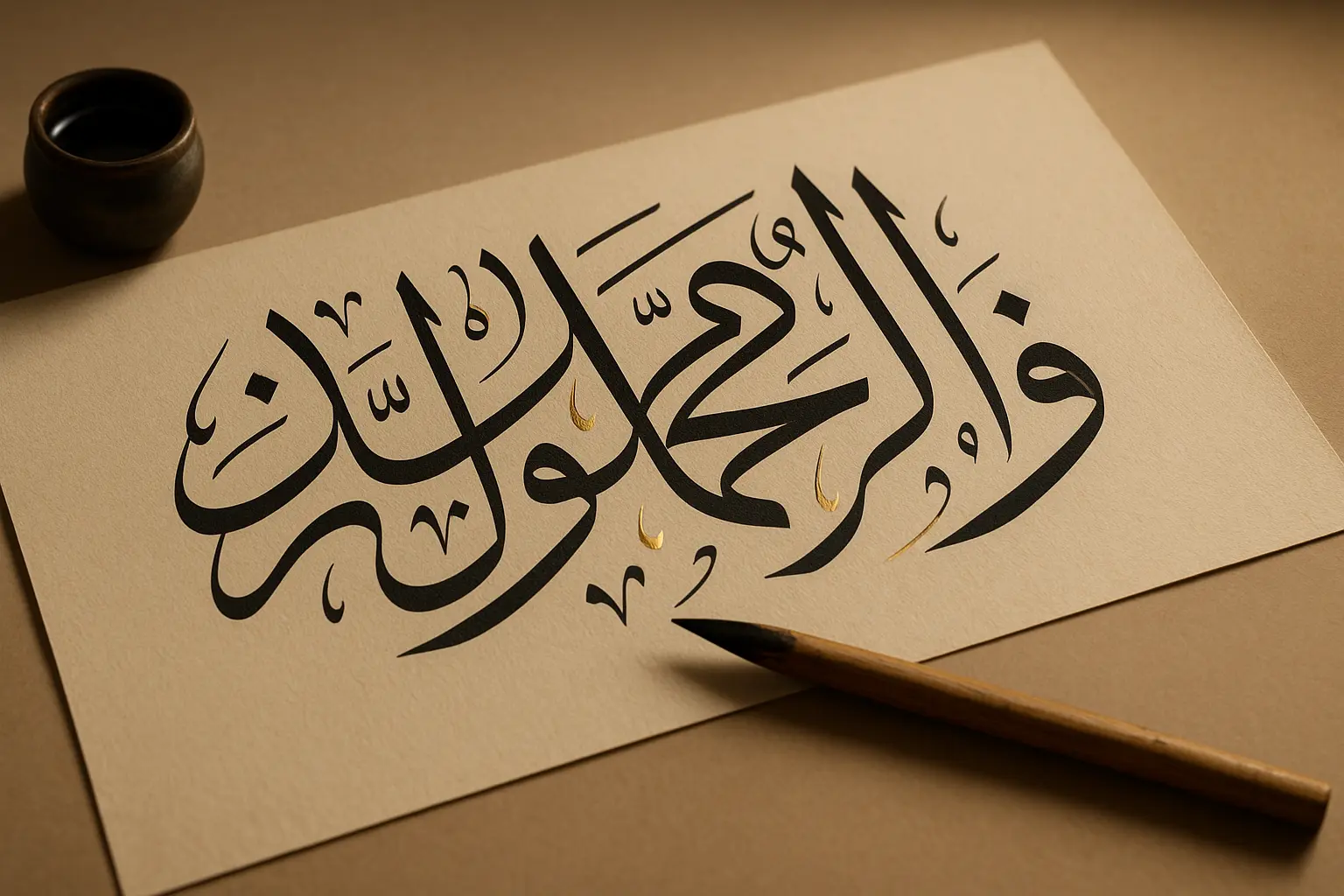
Step into any grand mosque or traditional Islamic structure, and you’ll notice something extraordinary — walls, domes, and arches adorned not with portraits or statues, but with graceful, flowing lines of Arabic script. These are not merely words; they are works of art, meticulously crafted through centuries of devotion and creativity.
Islamic calligraphy is more than writing — it is the visual expression of faith, beauty, and identity. It unites spirituality, geometry, and artistic mastery, creating one of the most timeless and sophisticated art forms in the world.
In this in-depth exploration, we’ll journey through the origins, evolution, meaning, and modern expressions of Islamic calligraphy — a sacred art that continues to inspire hearts and minds across generations.
Why Islamic Calligraphy Is So Revered
In Islamic culture, the written word holds divine significance. The Qur’an, Islam’s holy book, begins with the command “Read,” highlighting knowledge and expression through language as sacred acts. Over time, writing the Qur’an beautifully became both an act of devotion and a form of spiritual meditation.
The Word of God in Artistic Form
Since depictions of human and animal figures were often discouraged in religious settings, early Muslim artists turned to the beauty of letters and geometry to reflect divine perfection. Each curve, line, and proportion of a letter carries spiritual symbolism — harmony, unity, and the order of creation.
A Spiritual Discipline
For master calligraphers, writing was never mechanical. It was an act of worship — a meditation of the soul. The process demanded patience, humility, and precision. As an old saying goes, “Purity of writing is purity of the soul.”
The Unity of Meaning and Form
In Islamic calligraphy, beauty lies not only in the words written but also in how they are formed. Each letter is crafted in harmony with the others, creating visual rhythm and spiritual resonance — a perfect balance between form and meaning.
The Historical Journey of Islamic Calligraphy

The story of Islamic calligraphy begins in the 7th century, alongside the rise of Islam. As the Qur’an was revealed, preserving its words became a sacred duty.
The Early Period: The Kufic Script
The earliest form of Arabic calligraphy is known as Kufic, named after the city of Kufa in Iraq. Characterized by its bold, angular lines and geometric shapes, Kufic was ideal for monumental inscriptions on mosques, coins, and manuscripts. It gave early Islamic art its distinct architectural elegance.
The Abbasid Era: Refinement and Innovation
During the Abbasid Caliphate, calligraphy flourished as scholars and artists refined scripts to improve readability and beauty. Ibn Muqla, a legendary calligrapher of the 10th century, introduced a proportional system that standardized letter shapes using precise geometric ratios. This system became the foundation of classical Arabic calligraphy.
The Ottoman and Persian Influence
As Islam spread, each region developed its own unique styles.
- In Persia, the elegant Nasta‘liq script emerged, perfect for poetry and literature.
- In Ottoman Turkey, calligraphers developed the Diwani and Thuluth scripts — ornate, flowing, and visually rich.
- In North Africa and Spain, Maghribi script evolved, featuring bold curves and wide letters suited for architectural decoration.
Each region infused calligraphy with its cultural flavor, yet all remained connected by one shared purpose — to glorify the divine through beauty.
The Spiritual and Aesthetic Dimensions
Islamic calligraphy transcends artistic beauty; it’s a spiritual experience for both the artist and the observer.
Writing as Worship
Every stroke of the pen is intentional. Calligraphers often begin with ablution, facing the qibla (direction of prayer) before they write. The act becomes a prayer in motion — a way to connect heart, hand, and divine word.
Symbolism in Letters
In Islamic mysticism, letters themselves carry profound meaning.
- The letter Alif (ا), straight and upright, symbolizes unity and the oneness of God.
- The circle, often used in composition, represents eternity and completeness.
- The dot, small yet essential, symbolizes the beginning of all creation.
Beauty Through Geometry and Balance
Islamic calligraphy follows precise geometric principles. Every letter and curve is proportioned in harmony with others, reflecting the order and symmetry of the universe. The result is a visual rhythm — a dance of faith and form.
Major Styles of Islamic Calligraphy
Over the centuries, many styles developed — each with its own distinct character and purpose.
1. Kufic
- Appearance: Angular, square, and strong.
- Use: Early Qur’anic manuscripts and architectural inscriptions.
- Character: Simple yet monumental, symbolizing strength and stability.
2. Naskh
- Appearance: Rounded, legible, and flowing.
- Use: Everyday writing and Qur’anic manuscripts.
- Character: Became the most widely used Arabic script and the basis for modern Arabic typefaces.
3. Thuluth
- Appearance: Elegant, elongated, with large sweeping curves.
- Use: Mosque inscriptions, domes, and decorative panels.
- Character: Regal and dramatic — often called the “Mother of Calligraphy.”
4. Diwani
- Appearance: Dense, ornate, and intertwined.
- Use: Ottoman court documents and decorative art.
- Character: Secretive and luxurious, reflecting imperial prestige.
5. Nasta‘liq
- Appearance: Slanted, soft, and fluid — often described as “hanging script.”
- Use: Persian poetry, manuscripts, and artwork.
- Character: Romantic and poetic, symbolizing elegance and grace.
6. Maghribi
- Appearance: Wide letters with deep curves.
- Use: Found in North African Qur’ans and Andalusian architecture.
- Character: Distinctive and bold, reflecting Western Islamic tradition.
The Craft: Tools, Materials, and Techniques
Creating a calligraphic masterpiece is a delicate and disciplined craft.
The Qalam (Reed Pen)
The qalam is the traditional reed pen used by calligraphers. It’s cut at specific angles to produce different stroke widths, giving life to the varied line dynamics of Arabic letters.
Ink and Pigment
Calligraphers prepare their own ink using natural ingredients — soot, gum arabic, and water — producing deep blacks and subtle tones of brown or gold. Gold leaf and colored pigments are often added for illumination.
The Writing Surface
Calligraphy appears on parchment, paper, ceramics, glass, stone, wood, and even textiles. Each medium requires a unique technique and treatment, but all share the same purpose: to beautify the written word.
Calligraphy in Architecture and Design
One of the most remarkable aspects of Islamic calligraphy is its integration into architecture.
- Mosques: Qur’anic verses adorn domes, arches, and mihrabs, serving as visual reminders of faith.
- Palaces and public buildings: Calligraphic inscriptions convey authority, blessings, and poetic beauty.
- Decorative arts: From carpets and ceramics to lamps and metalwork, calligraphy transforms functional objects into sacred art.
In modern times, calligraphy continues to influence interior design, home décor, and branding. In cities like Dubai, Islamic calligraphy wall art has become a popular way to combine spirituality with contemporary aesthetics — bringing the beauty of the divine word into modern spaces.
The Meaning Behind the Art
Islamic calligraphy is not only about beauty — it’s about meaning. Each piece carries layers of significance:
- Devotion: Writing sacred words is an act of worship.
- Meditation: The repetition of forms and letters encourages mindfulness.
- Cultural identity: It connects modern Muslims to centuries of heritage.
- Universality: Even without understanding Arabic, viewers can feel the spiritual harmony in its patterns and balance.
Calligraphy reminds us that beauty and belief can coexist — that faith itself can be art.
Contemporary Revival and Modern Influence
Far from being a relic of the past, Islamic calligraphy is thriving in today’s art world.
Calligraffiti and Modern Art
Modern artists blend traditional Arabic scripts with street art, abstract design, and digital media — creating bold, global expressions of identity. This fusion, often called “calligraffiti,” connects classical elegance with urban energy.
Fashion and Branding
Luxury brands, designers, and home décor studios now use Arabic calligraphy in fabrics, packaging, and wall art — blending tradition with modern taste.
Digital Revival
Technology has also revived calligraphy through digital fonts, 3D printing, and AI-assisted design, making the art more accessible to new generations. Yet even in the digital age, the essence remains the same: beauty, precision, and devotion.
Appreciating Islamic Calligraphy
Here are a few ways to truly appreciate this art form:
- Observe the structure: Notice the balance, geometry, and rhythm of letters.
- Understand the text: When possible, learn the meaning of the inscription.
- Recognize the script style: Identifying Kufic, Thuluth, or Naskh helps you connect to its history.
- Feel the emotion: Beyond technical mastery, notice how the composition makes you feel — calm, inspired, or reflective.
- Explore local galleries: Many galleries in the UAE and beyond showcase contemporary Islamic calligraphy artists keeping the tradition alive.
Challenges and Preservation
Despite its prominence, Islamic calligraphy faces modern challenges:
- Loss of traditional training: Fewer masters are passing down classical techniques.
- Commercialization: Mass-produced prints sometimes dilute authenticity.
- Preservation issues: Historic manuscripts and monuments require ongoing conservation.
- Cultural misunderstanding: Many viewers appreciate the beauty but miss the depth of its spiritual meaning.
Fortunately, art foundations, museums, and online communities are now working to preserve and promote the authenticity of Islamic calligraphy for future generations.
Why Islamic Calligraphy Still Matters Today
In an age of instant messages and digital fonts, the timeless elegance of hand-drawn script offers something rare — mindfulness, meaning, and beauty.
It’s a bridge between faith and creativity, between the past and the present. Whether carved in marble, painted on canvas, or printed on a modern wall, Islamic calligraphy continues to speak to the heart — a reminder that art can be both sacred and eternal.
Conclusion
The journey of Islamic calligraphy is a journey through art, history, and faith. From the bold Kufic inscriptions of ancient mosques to the fluid grace of Thuluth and the elegance of Nasta‘liq, this art form embodies devotion, discipline, and divine inspiration.
It reminds us that beauty can be worship, and writing can be prayer. Each stroke tells a story — not only of ink and pen but of belief, patience, and the human desire to connect with something greater than ourselves.
Islamic calligraphy is timeless — because faith and beauty are timeless.
FAQs
1. What makes Islamic calligraphy unique?
It combines art and spirituality. Every letter is created with geometric precision and spiritual intent, transforming writing into a sacred visual form.
2. Is Islamic calligraphy only religious?
Not always. While rooted in Qur’anic text, calligraphy is also used for poetry, architecture, and modern art.
3. Do you need to know Arabic to appreciate it?
No. Even without understanding the language, one can feel the rhythm, balance, and emotion behind the artwork.
4. What are the main styles of Islamic calligraphy?
The major styles include Kufic, Naskh, Thuluth, Diwani, Nasta‘liq, and Maghribi — each with unique beauty and purpose.
5. Is Islamic calligraphy still practiced today?
Absolutely. Artists worldwide are preserving and reinventing this tradition — from classical scripts to modern calligraffiti and digital art.


